If you have ever walked outside on a warm fall day and seen clusters of black and red insects covering your siding, windows, or patio, you have met boxelder bugs. Boxelder bugs can appear by the hundreds, making walls seem like they are moving and leaving many homeowners wondering how to get rid of them quickly.
The good news is that boxelder bugs are mostly a nuisance pest. They do not seriously damage trees, shrubs, or other landscape plants, and they do not chew wood or wiring inside your home. The real issue is comfort: they gather in large numbers on sunny exterior walls and can slip indoors to overwinter in wall voids, attics, and around windows.
What Are Boxelder Bugs?
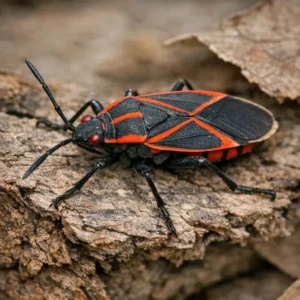
Boxelder bugs are small insects, usually about half an inch long, with dark bodies and distinctive red or orange lines along their wings and thorax. Nymphs (the immature stages) are smaller and mostly red. They belong to a group of insects called “true bugs,” which means they have piercing–sucking mouthparts.
They get their name from their favorite host tree, the boxelder (a type of maple), but they can also be found on other maples and ash trees. They often feed on seeds and occasionally on leaves and tender plant parts. Their feeding may cause some spots or minor deformities on seeds and foliage, but for the most part they do not seriously harm trees, shrubs, or garden plants. That is a key point: outside, they are mostly a nuisance, not a destructive pest.
Why Boxelder Bugs Are Mostly Harmless Outdoors
Many homeowners worry that boxelder bugs will kill their trees or ruin their landscaping. In reality:
- They primarily feed on seeds and occasionally sap, not deep into stems or roots.
- They rarely cause long‑term damage to healthy trees or ornamental plants.
- They do not chew wood, wiring, or structural materials.
- They are not known for spreading disease to people or pets.
The main problem is visual and practical. When they gather by the hundreds on a sunny wall, deck, or patio, it feels like an invasion. They can stain lighter surfaces if crushed, and their presence is simply unpleasant when you are trying to enjoy your yard. But from a plant health perspective, they are generally not something that needs aggressive outdoor eradication.
Because of that, the smartest strategy is not to “wipe them out” in the yard, but to focus on one core goal: keep them from moving inside.
Why Do Boxelder Bugs Come to Your House?
Boxelder bugs are strongly driven by temperature and sunlight. Their year follows a predictable pattern:
- Spring – Adults that survived winter become active, move back to their host trees or nearby vegetation, and begin feeding and laying eggs.
- Summer – Eggs hatch into red nymphs, which feed and molt several times before becoming adults.
- Late summer / fall – As nights cool and days shorten, adults start looking for warm, dry places to spend the winter. South‑ and west‑facing walls that soak up afternoon sun are especially attractive.
- Fall into early winter – Bugs cluster on siding, brick, and around windows, then search for any crack or gap that leads to a protected space. If your home has unsealed joints or openings, they may move into wall voids, attics, or around windows and doors.
They do not reproduce inside your home. They simply use indoor voids as a sheltered place to hide through winter. On warmer days, some may wander into living spaces, ending up on windowsills, light fixtures, or along baseboards.
Why Killing Every Outdoor Bug Is Not the Best Strategy
Because boxelder bugs are largely harmless outdoors, heavy‑handed treatment across the entire yard usually is not needed and often is not very effective in the long term. There are several reasons to focus on prevention and targeted control instead of aggressive outdoor spraying:
- New bugs will return from surrounding trees each year. Even if you reduce the population one season, they will recolonize from nearby boxelder, maple, and ash trees.
- Broad outdoor treatments can affect beneficial insects. Spraying large areas just to remove a nuisance insect may impact pollinators and natural predators you want to keep.
- The comfort problem is mostly indoors, not in the yard. If you can keep them out of your living space and limit the big wall clusters, you solve 90 percent of the frustration.
That is why a smart boxelder bug plan centers on exclusion (keeping them out) and spot control, not trying to sterilize the entire landscape.
How to Keep Boxelder Bugs Out of Your Home
1. Seal Gaps and Cracks
Exclusion is the most effective long‑term tool against boxelder bugs. Focus your efforts on the places they use to get inside:
- Seal cracks around window and door frames with high‑quality exterior caulk.
- Install or replace worn weatherstripping on doors and thresholds.
- Check siding joints, especially where different materials meet (brick to siding, siding to trim).
- Screen attic, soffit, and gable vents with fine mesh in good repair.
- Seal around utility penetrations such as cable, gas lines, and dryer vents.
Even small gaps can be enough for these flat‑bodied insects to squeeze through. A weekend spent sealing and tightening the envelope of the home pays off for boxelder bugs and many other pests.
2. Focus on Sun‑Facing Walls
Because boxelder bugs prefer warm surfaces, they typically gather on south and west walls first. Take extra care around:
- South‑ and west‑facing windows and doors.
- Siding seams on those sides of the house.
- Eaves, soffits, and fascia where sun hits in the afternoon.
If you have time for only a partial sealing project this season, prioritize these exposures.
3. Reduce Exterior Attractants Near Walls
You cannot move your house, but you can make the immediate area around it less appealing:
- Rake up leaf litter and debris around the foundation, especially under shrubs and along edges.
- Avoid piling firewood or stored materials directly against the house.
- Trim vegetation that touches siding and can provide shelter and access.
- If you have female boxelder trees very close to the house, talk to a tree care professional about longer‑term options; seeds from these trees are a primary food source.
This does not eliminate boxelder bugs from your property, but it reduces convenient gathering spots right where they are most likely to find entry points.
4. Manage Bugs That Do Get Indoors
Even with good prevention, some boxelder bugs may slip inside. The good news is that indoor management is straightforward:
- Vacuum, don’t smash. Use a vacuum cleaner with a hose attachment to remove bugs from windowsills, walls, or ceilings. Smashing them may leave stains and odor.
- Empty the vacuum promptly. Put the vacuum bag or contents in a sealed trash bag and remove it from the home.
- Avoid interior “bombs” or space sprays. These are rarely necessary and do little against insects sheltering inside wall voids.
Remember, they are not reproducing inside your home. Removing the ones you see and improving sealing for the future are usually enough.
5. Consider Targeted Exterior Treatments
In some cases, especially during heavy fall migrations, targeted exterior treatments can help reduce the number of bugs clustering around critical areas of the home. These are typically applied:
- To siding, eaves, and around windows and doors on sun‑facing walls.
- At the right time, just before or during the peak migration period in late summer or early fall.
Because timing, product choice, and application method all matter, many homeowners choose to have this work done by a pest control professional familiar with local boxelder bug patterns. The goal is to create a barrier along key surfaces, not to treat the entire yard or landscape.
Avoid the Following:
When boxelder bugs appear in big numbers, it is easy to react in ways that do more harm than good:
- Do not saturate interior spaces with pesticides. This does little to address bugs hidden in walls and may increase exposure to people and pets.
- Do not burn or heavily prune trees impulsively. Removing established trees can create other problems and often does not fully resolve boxelder bug activity if other host plants are nearby.
- Do not pressure‑wash bugs into siding gaps. Power washing swarms off your house can actually drive them deeper into cracks and crevices.
- Do not rely solely on sticky traps. Traps may catch a few bugs that wander indoors but will not stop the main migration.
A calm, methodical approach based on sealing, cleanliness, and targeted measures is far more effective.
When to Call a Professional
Although boxelder bugs are considered a nuisance pest, there are times when outside help makes sense:
- You see large “moving wall” clusters every fall and continue to find bugs inside despite your best sealing efforts.
- Your home has complex construction, high peaks, or difficult‑to‑reach areas where bugs are entering.
- You are not sure whether the insect you are seeing is actually boxelder bugs or something else.
- You want a timed exterior treatment as part of a broader fall pest service that also addresses spiders, wasps, and other seasonal invaders.
A professional can inspect the building envelope, spot small entry points you might miss, and apply products precisely to high‑risk areas without over‑treating the property.
Boxelder Bugs and Brigham City’s Climate
In Brigham City and around Box Elder County, boxelder bugs take advantage of a few local factors:
- Boxelder, maple, and ash trees are common in yards and along streets.
- Our warm, sunny fall days paired with cool nights create strong temperature contrasts that drive clustering behavior.
- Many homes have older siding, wood trim, or foundation settling that leaves small gaps ideal for overwintering insects.
Because this pattern tends to repeat every year, homeowners who take time to seal, repair, and plan for boxelder bug season usually have much easier falls after the first year of effort.
If boxelder bug season has become a yearly frustration at your Brigham City home, consider combining a thorough weekend sealing project with a well‑timed professional service. With a bit of planning, you can keep these harmless but annoying bugs where they belong: outside, instead of in your living room.