Living along the Wasatch Front foothills means sharing your space with a surprising variety of spiders. Most are shy, helpful predators that quietly control flies, mosquitoes, and other insects. A few species, like the black widow, deserve more caution.
This guide covers the main types of spiders you are likely to see in foothill neighborhoods, how to recognize them, what risks they actually pose, and practical tips for living with fewer spiders inside your home.
Spiders 101: What You Should Know First
Before diving into specific species, it helps to keep a few basics in mind:
- Spiders are predators that feed on insects and other small arthropods.
- The vast majority are harmless to people and pets.
- Most bites happen when a spider is accidentally pressed against skin (in clothing, bedding, or shoes).
- Seeing spiders indoors often means you also have insects for them to feed on.
So the overall strategy in foothill homes is usually not “kill every spider,” but:
- reduce spiders indoors, and
- manage the conditions that attract them.
Common Wasatch Front Foothill Spiders
1. Black Widow (Latrodectus hesperus)
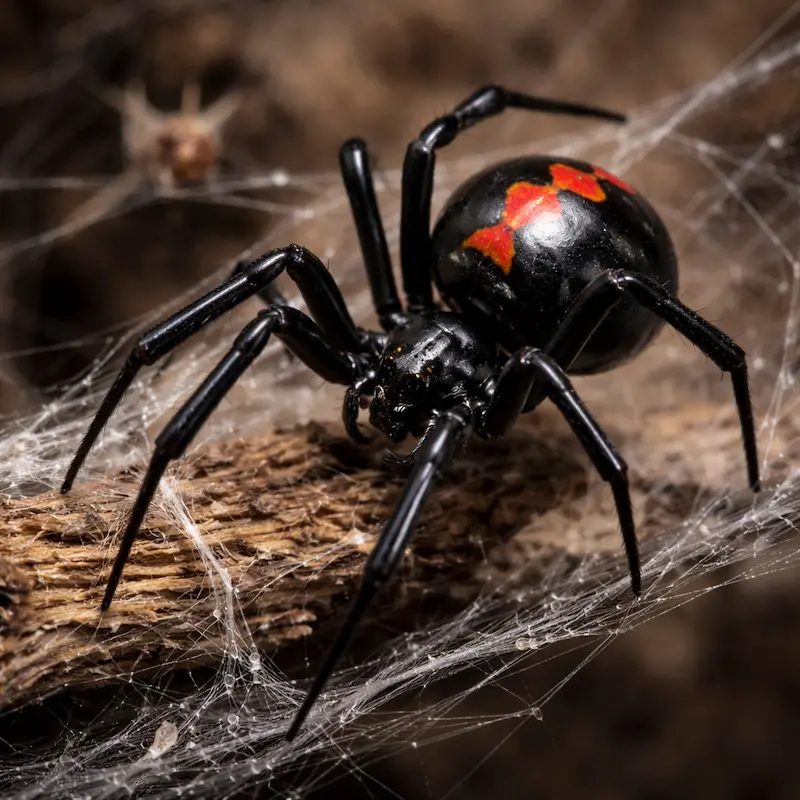
Where you find them:
- Woodpiles, rock piles, sheds, garages, under steps and decks, in dark corners.
- Often near ground level in cluttered, undisturbed spots.
What they look like:
- Shiny black body with a rounded abdomen.
- Red or orange hourglass mark on the underside of the abdomen (males and juveniles may be lighter and less obvious).
Why they matter:
- This is the main medically important spider in the area.
- Bites are rare but can be serious and painful, especially for children, the elderly, or those with health issues.
What to do:
- Avoid reaching into dark spaces where you cannot see.
- Wear gloves when handling firewood, rocks, or stored materials.
- If you find a black widow near your home or in high‑traffic areas, it is reasonable to remove it or have it professionally treated.
2. Hobo and Other Funnel‑Weaver Spiders
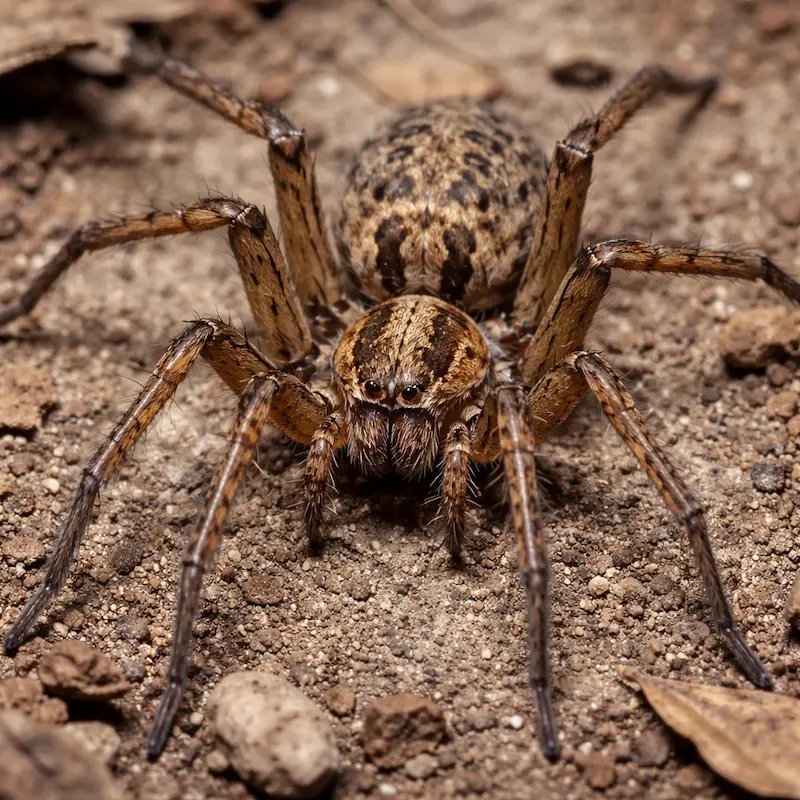
Often grouped as “hobo spiders” or “funnel‑weavers,” these spiders are frequently seen in foothill basements and around landscaping.
Where you find them:
- Low vegetation, rock walls, foundation edges, and inside basements or garages.
- They build sheet‑like webs with a funnel‑shaped retreat at one side.
What they look like:
- Brownish with long legs, often with patterns on the abdomen.
- Hard to distinguish from other similar ground‑dwelling spiders without close examination.
Why they matter:
- They look intimidating and often wander indoors, especially in late summer and fall.
- Most current research suggests their bites are not as dangerous as once believed, but they can still cause local irritation.
What to do:
- Vacuum webs and spiders found indoors.
- Use door sweeps and seal gaps at ground level.
- Reduce clutter and dense vegetation right against the foundation.
3. Wolf Spiders
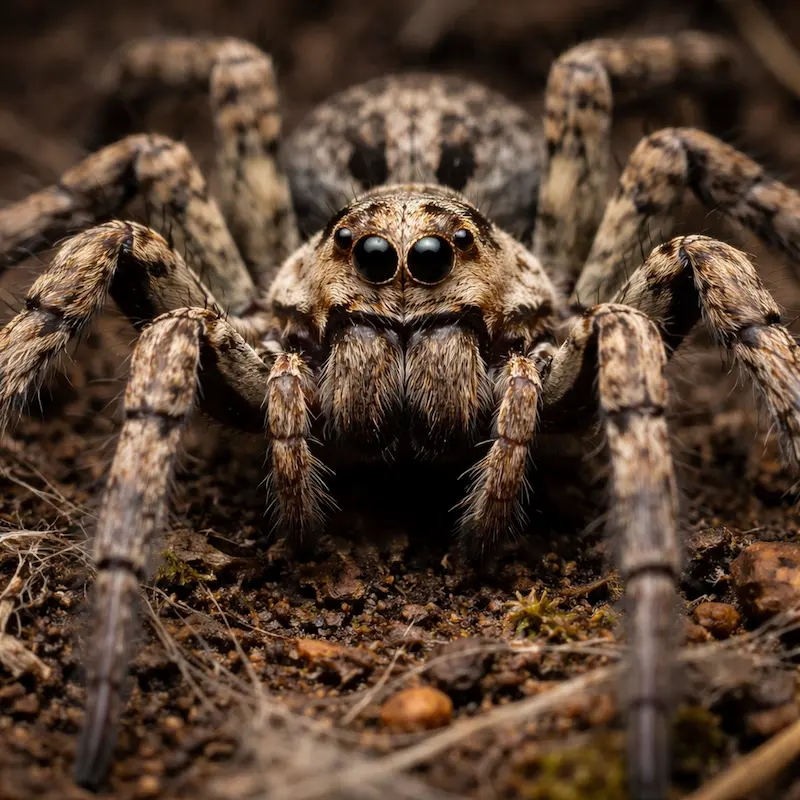
Wolf spiders are among the most noticeable spiders in foothill neighborhoods due to their size and habit of running in the open.
Where you find them:
- Ground level: lawns, rock gardens, under logs and debris.
- Often seen crossing patios, garages, and basements in search of prey.
What they look like:
- Medium to large, often brown or gray, with robust bodies and long legs.
- Characteristic eye pattern: a front row of smaller eyes with larger eyes above that can reflect light at night.
Why they matter:
- They do not use webs to catch food; they actively hunt insects.
- Bites are uncommon and usually happen only when a spider is trapped or handled.
What to do:
- Reduce ground clutter and tall grass near the house.
- Seal door gaps and foundation cracks.
- If one wanders inside, simply cup and release it outdoors or vacuum and dispose of it.
4. Jumping Spiders
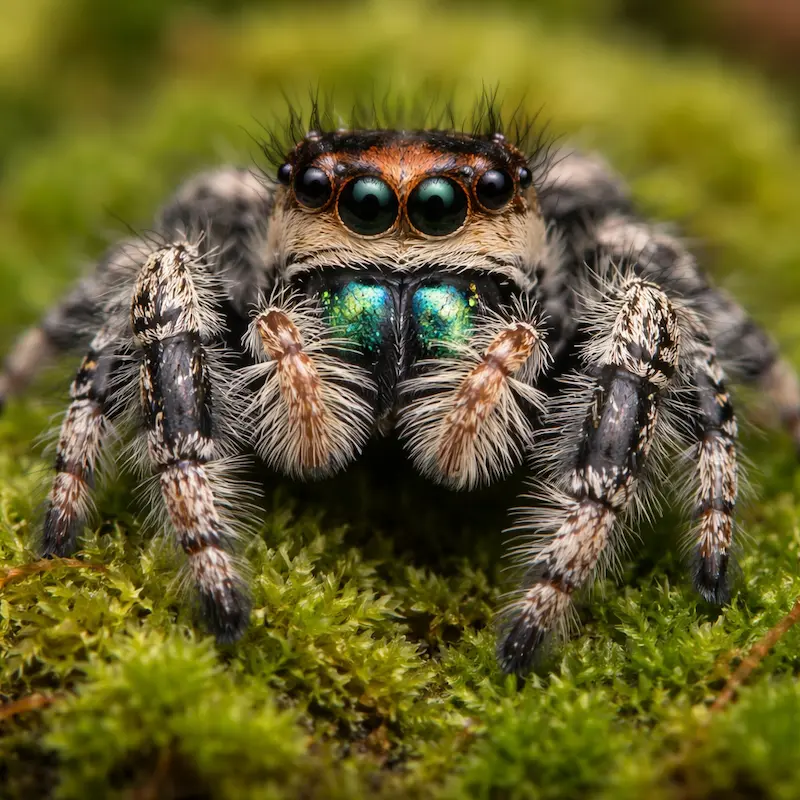
Jumping spiders are small, active (and harmless) spiders that many people often notice around windows and sunny walls.
Where you find them:
- Exterior walls, window sills, decks, and sometimes inside near windows.
- They like bright, sunlit areas where they can hunt.
What they look like:
- Small, compact body, often black or dark with white or colorful markings.
- Large front eyes that give them a “cute,” almost cartoonish look.
Why they matter:
- Harmless to people and very helpful at catching flies, small moths, and other insects.
- Their excellent vision means they often seem to watch you.
What to do:
- They rarely cause problems. If you find them indoors, we advice you to gently move them outside.
- No special control is usually needed.
5. Orb‑Weaver Spiders (Garden Spiders)
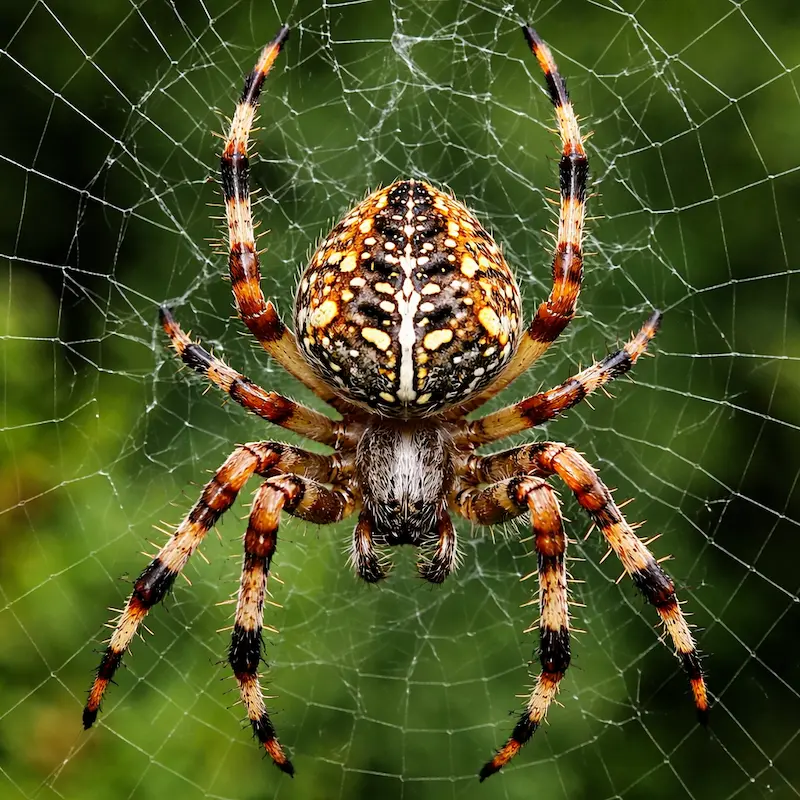
These are the classic web‑builders you see in late summer and fall, with large circular webs stretched between plants, railings, or eaves.
Where you find them:
- Gardens, shrubs, porch lights, and between fence posts or railings.
- High insect traffic areas, especially where lights draw flying insects at night.
What they look like:
- Round abdomen, often with striking patterns or colors (yellows, browns, whites).
- Long legs with banding or stripes.
Why they matter:
- They are excellent natural pest control, catching many flying insects.
- Bites are rare and usually mild.
What to do:
- Outdoors, it is usually best to leave them alone.
- If a web is blocking a doorway or walkway, you can gently relocate the spider with a soft brush or stick.
6. Yellow Sac Spiders
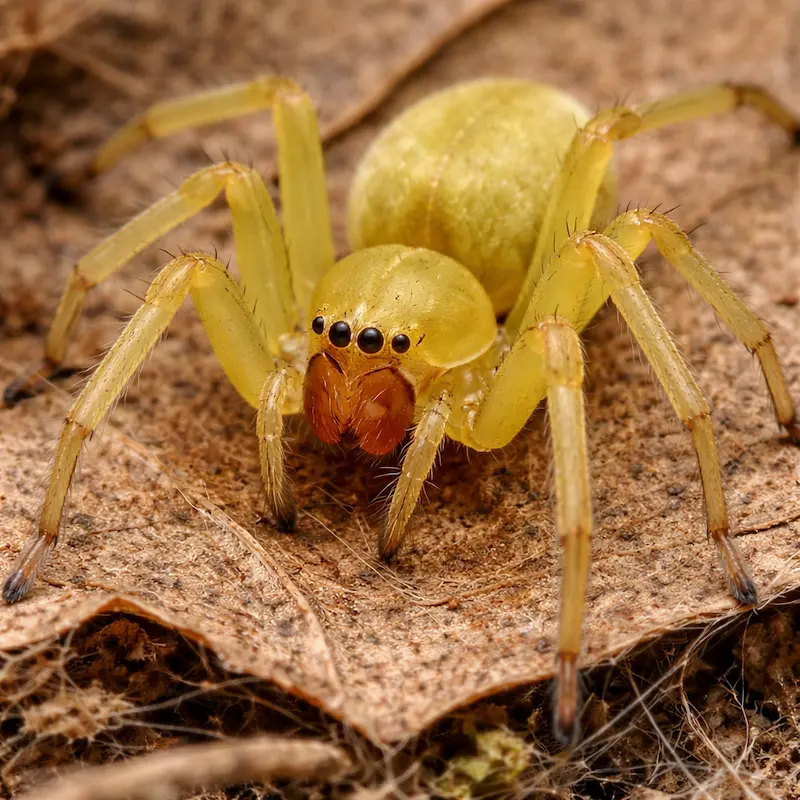
Yellow sac spiders are common both outdoors and indoors along the Wasatch Front.
Where you find them:
- On vegetation and in gardens during the warm months.
- Indoors, they may be found along ceilings, in corners, or tucked in small silken sacs where walls and ceilings meet.
What they look like:
- Pale yellow or light tan, relatively small but long‑legged.
- Usually no bold markings.
Why they matter:
- They are more likely than many other spiders to bite if trapped against the skin or stuck in clothing or bedding.
- Bites are typically painful but not dangerous for most people.
What to do:
- Shake out clothing, towels, and bedding that have been sitting on the floor or in storage.
- Vacuum visible sacs and spiders indoors.
7. Crab Spiders
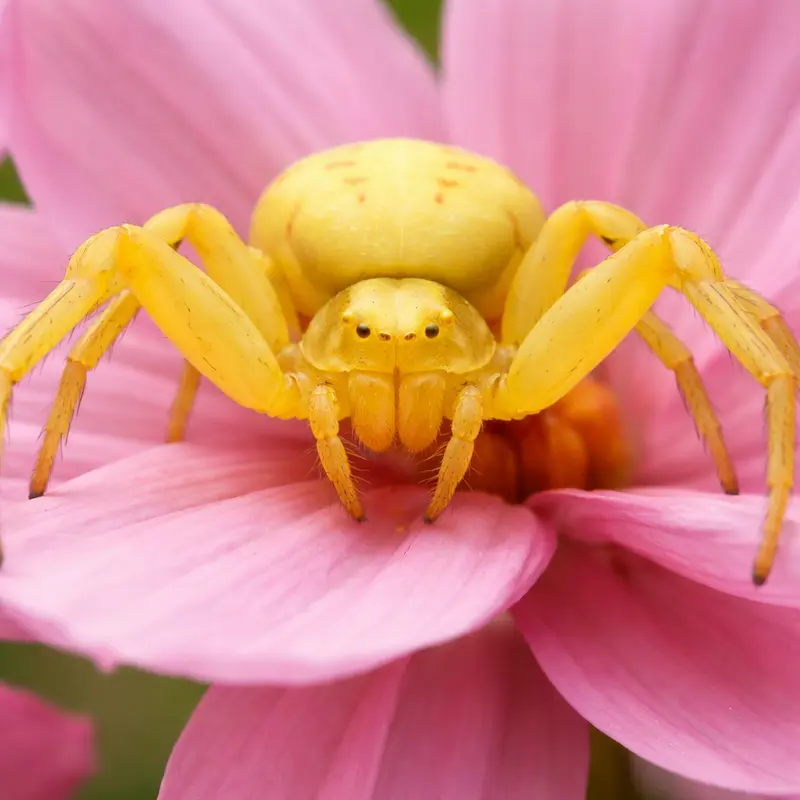
Crab spiders are ambush predators often seen on flowers or bark, waiting for insects to pass by.
Where you find them:
- Flower heads, shrubs, and tree bark.
- Less often inside; usually outdoor hunters.
What they look like:
- Flattened bodies with the first two pairs of legs longer and held out to the sides, like a crab.
- Some species can blend into flowers and bark with excellent camouflage.
Why they matter:
- They help control pollinating insects and other small arthropods.
- Bites are extremely uncommon.
What to do:
- No control is usually necessary. They are part of a healthy garden ecosystem.
Are There Tarantulas in the Foothills?
Tarantulas in Utah tend to be more common in drier, lower‑elevation areas, but wandering individuals can occasionally be found along foothill regions. They are large, slow‑moving, and generally non‑aggressive. For most homeowners, tarantulas are a rare curiosity rather than a regular concern.
If you see one:
- Keep a respectful distance.
- If needed, gently encourage it into a container and relocate it away from the house.
How Dangerous Are Foothill Spiders, Really?
Despite their reputation, most foothill spiders:
- Avoid people when possible.
- Bite only as a last resort.
- Cause bites that are comparable to bee stings in pain and severity for most individuals.
The main exception is the black widow, which warrants more caution. If you suspect you have been bitten by a black widow or have symptoms like severe pain, muscle cramps, or difficulty breathing, seek medical attention promptly.
For the majority of other species, simple first aid (washing the bite area, ice for swelling, and monitoring for unusual reactions) is sufficient.
Reducing Spiders in Foothill Homes
You will never eliminate spiders completely, especially in foothill neighborhoods with lots of natural habitat, but you can keep them to a minimum indoors.
1. Control Other Insects
Spiders go where the food is. Reducing indoor insects reduces spiders:
- Use tight‑fitting screens on windows and doors.
- Turn off outdoor lights when not needed (or use yellow “bug” bulbs).
- Store food in sealed containers and clean up crumbs promptly.
- Fix moisture problems that attract insects (leaks, standing water, damp basements).
2. Seal Entry Points
Spiders often follow the same routes as other pests:
- Caulk gaps around window and door frames.
- Add or replace door sweeps.
- Seal cracks in foundations and around utility lines.
- Repair damaged screens.
3. Reduce Clutter
Spiders love quiet, undisturbed places:
- Keep storage off the floor where possible.
- Use plastic bins instead of cardboard boxes in basements and garages.
- Periodically move and clean behind stored items, furniture, and appliances.
4. Maintain the Perimeter
Outside, a few simple habits reduce spider activity right next to the house:
- Trim shrubs, grasses, and ivy back from the foundation.
- Move firewood, boards, and rock piles away from the walls.
- Sweep down webs from siding, eaves, and porch areas as you see them.
5. Use Mechanical Removal Indoors
For spiders you see inside:
- Use a cup and paper to capture and release them outdoors.
- Vacuum webs, spiders, and egg sacs and dispose of the vacuum bag promptly.
When to Consider Professional Help
Most foothill households can manage spiders with good maintenance and occasional spot removal. However, it may be worth getting professional help if:
- You are seeing black widows regularly in play areas, garages, or around entryways.
- You are finding large numbers of spiders indoors despite sealing and cleaning efforts.
- There are family members with high sensitivity or strong phobias around spiders.
- You just moved into a foothill home with heavy spider activity and want a clean starting point.
A professional can identify the species present, treat key harborages, and offer guidance specific to your property’s layout and surroundings.
Living with Spiders Along the Wasatch Front
Spiders are a natural part of foothill life, and most of the time they are quietly doing you a favor by eating insects that would otherwise become pests. The goal is not to remove them from the landscape, but to limit how many share your living space.
By learning which species are most common, understanding which ones deserve caution, and taking a few practical steps to “tighten up” your home and reduce insect prey, you can enjoy the beauty of the Wasatch Front foothills without feeling overrun by eight‑legged neighbors.